
Good construction management should be visible.
What happens on site becomes project information. Project information drives decisions. Decisions become accountable actions. Actions become part of the permanent project record.
One source of project information
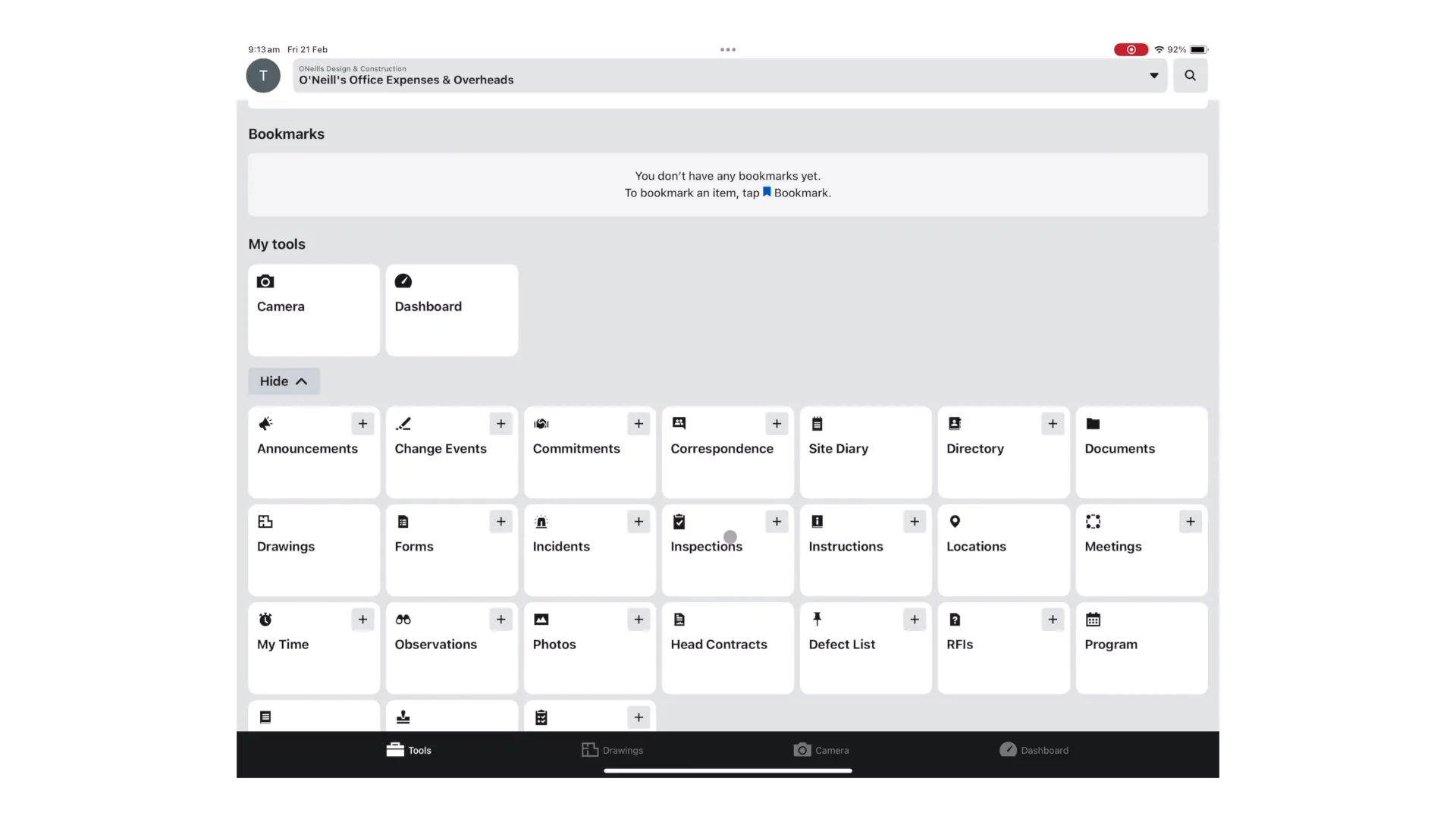
Construction software only matters when the project team uses it consistently. O’Neill’s uses Procore as a central project-management environment for drawings, RFIs, submittals, correspondence, inspections, photos and project records. The practical outcome is simple: site and office teams have a clearer path to current information instead of relying on disconnected inboxes, folders and memory.
For clients and consultants, that structure makes decisions easier to trace. A drawing revision, an RFI response or a site observation can be connected to the project record rather than disappearing into an informal conversation.
The site diary is a project record
A useful daily site diary records more than a sentence saying work continued. It can capture labour, subcontractor activity, weather, deliveries, programmed work, progress, constraints, delays and significant site events. Procore’s Site Diary supports these categories and archives the daily record so it remains accessible later.
O’Neill’s treats daily reporting as contemporaneous project evidence. That matters when a client, superintendent or project team needs to understand what occurred on a particular day and what conditions were present at the time.
Photographic evidence, not recollection
Site photographs give context to the written record. Progress, existing conditions, concealed work, access restrictions, defects and completed installations can be documented while they are visible. Procore supports capturing, organising and sharing construction photos from site and linking imagery into project records.
The value is not the number of photos taken. It is whether the right photograph can be found later and understood in context.
RFIs turn questions into accountable decisions
Unresolved information can become programme risk. A structured RFI records the question, supporting information, responsible parties, status and response history. Procore’s RFI workflow is designed to keep that information searchable and visible rather than relying on scattered email chains.
For a commercial project, the benefit is decision ownership: the team can see what is unresolved, who needs to respond and what information the site is waiting for.
Quality should be documented progressively
Inspections, observations and defect records allow quality to be verified as work progresses. Digital inspections can capture results and evidence from site, helping the project team identify missed checks and outstanding items before they accumulate at handover.
O’Neill’s approach is to build the quality record during construction, not attempt to recreate it at the end.
Knowing who is on site
O’Neill’s also uses SignOnSite for site attendance, inductions and safety workflows including SWMS. This gives the site team a clearer record of who is present and supports structured worker and site documentation.
Where the Procore integration is configured, SignOnSite attendance can flow into Site Diary work-hours and visitor records, while safety documentation remains organised against the project. The objective is less duplicate entry and a more reliable delivery record.
Transparency is the ability to see the project clearly
Good reporting should let a project team answer practical questions: What happened today? Who was on site? What progressed? What is outstanding? Who owns the next action? What decision is required? What does the current drawing say? What evidence exists of the site condition? What changed?
Transparency is not another report. It is the ability to see the project clearly enough to make decisions. Digital systems support that visibility, but disciplined use by the project team is what gives the information value.
From construction record to handover
The information created during delivery should remain useful when construction ends. Inspections, photographs, defects, correspondence and close-out records form part of the project history and support a cleaner transition into commissioning, practical completion and handover.
A well-run project leaves behind more than a finished space. It leaves an organised record of how the project was delivered.