
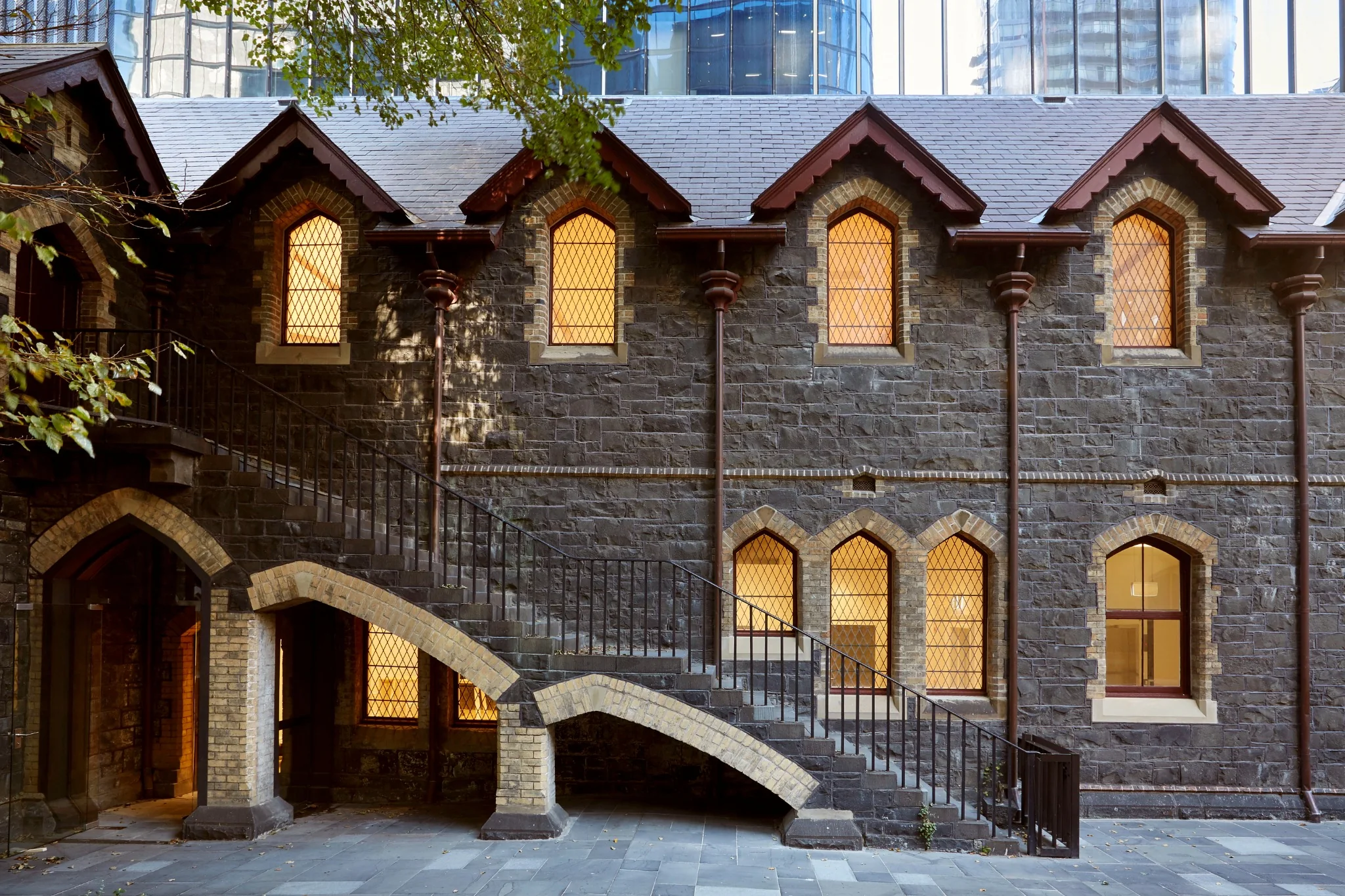
School House — Wesley Place
Heritage restoration and upgrade of a significant Melbourne building, retaining the character of the existing structure while integrating contemporary services, access and performance requirements.
View the projectHeritage work begins with understanding what is already there
Heritage restoration and adaptive reuse projects are different from new construction because the existing building is not a blank starting point. Structure, fabric, previous alterations, concealed conditions and original details all influence what can be retained, repaired, upgraded or introduced.
That makes early investigation critical. Drawings are useful, but existing buildings often contain information that only becomes clear through inspection, opening-up works and specialist input. The construction team needs to treat discovery as part of the process rather than an exception to it.
Retain character while improving performance
A successful heritage project does not preserve a building by freezing it in time. The objective is to protect the qualities that make it significant while allowing the building to meet contemporary expectations for access, comfort, safety, services and use.
At School House, Wesley Place, the completed works retained the distinctive stone walls, timber structure, gothic openings and historic character while introducing upgraded building services, accessibility, new circulation, joinery and contemporary performance. The value of the project is in the balance: old and new remain legible without competing with each other.
Services coordination is one of the hardest interfaces
Mechanical, electrical, fire, hydraulic, communications and accessibility requirements can be difficult to integrate into heritage fabric. The most obvious route for a new service is rarely the most appropriate route architecturally.
Coordination therefore needs to happen early and at a detailed level. Penetrations, grilles, lighting, containment, access panels and equipment locations should be resolved against the existing structure and significant fabric before trades arrive on site. Small service decisions can have a large visual impact in a building where original materials are part of the experience.
Specialist trades and sequencing matter
Heritage construction frequently involves trades working with materials or details that do not behave like contemporary systems. Repair methods, substrate preparation, timber work, masonry, finishes and reinstatement need to be sequenced so later work does not damage completed restoration.
The site team also needs clear quality benchmarks. Mock-ups, samples, hold points and inspections are useful because the right outcome can be difficult to describe using drawings alone. Physical review allows client, consultant and contractor expectations to align before large areas are completed.
Adaptive reuse is a commercial decision
Retaining and adapting an existing building can create a level of identity that is difficult to reproduce in a new space. It can also bring complexity: unknown conditions, constrained access, specialist approvals, services integration and a higher need for coordination.
For clients considering heritage refurbishment or adaptive reuse, the important question is not simply whether a contractor has completed old buildings before. It is whether the team can manage uncertainty without losing control of programme, cost, quality and the architectural intent.
Questions clients ask before committing.
What makes heritage refurbishment different from a standard fitout?
Existing fabric is part of the scope, not simply the background. Investigation, protection, specialist trades, sequencing and consultant input all need to account for what can be retained, repaired or altered.
When should a builder be involved in a heritage project?
Early involvement is valuable when access, temporary works, hidden conditions, services integration and specialist procurement may affect the design. Buildability input before documentation is complete can expose risks while there is still time to resolve them.
Can heritage character be retained while improving building performance?
Yes. The project strategy should distinguish significant fabric from new interventions, then coordinate services, access, fire, acoustic and operational requirements so contemporary performance does not overwhelm the retained character.