
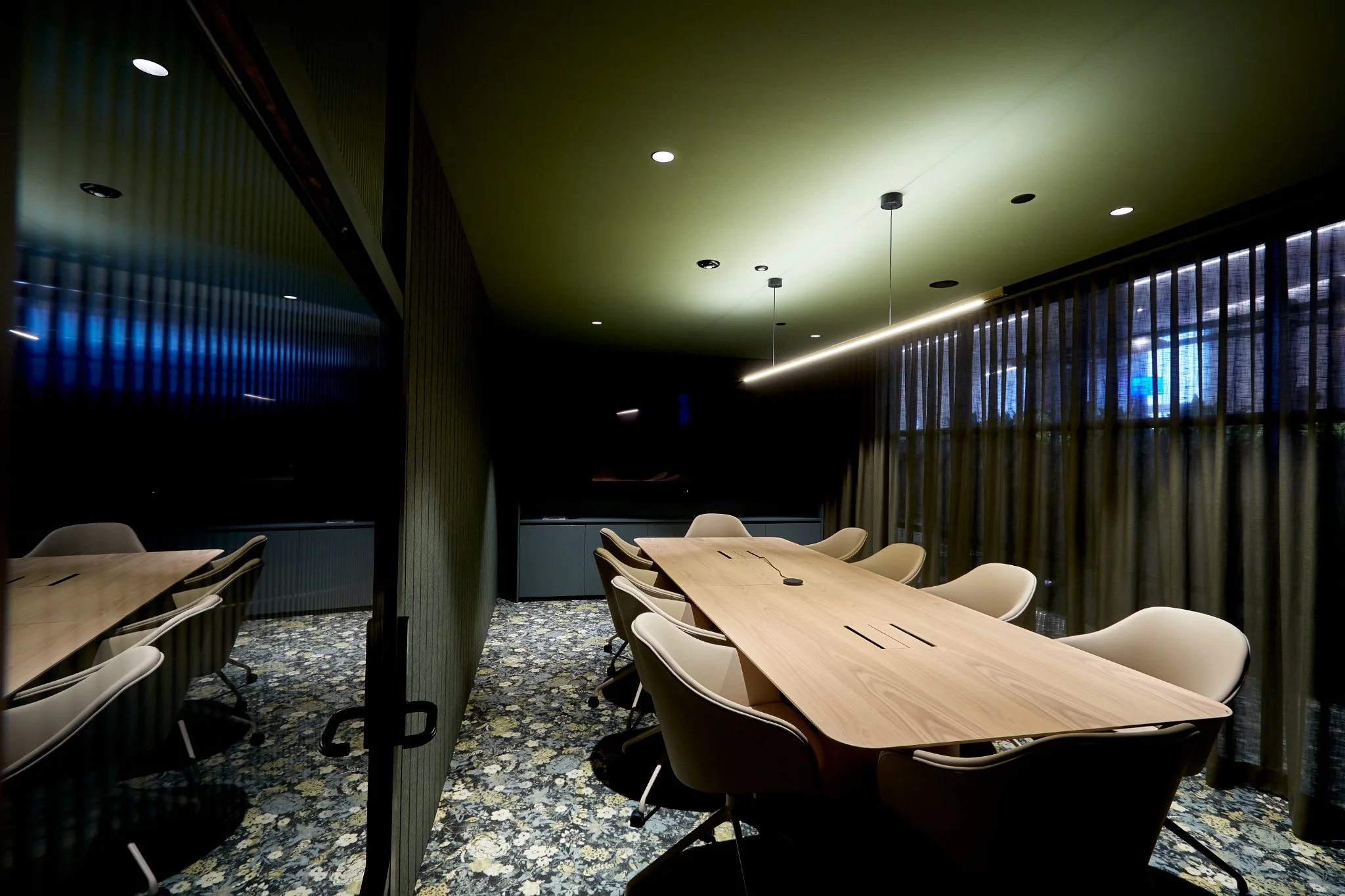
717 Bourke Street — Lobby & Business Lounge
A live commercial-building refurbishment where arrival, hospitality, business-lounge, meeting and presentation spaces were delivered while protecting day-to-day building operation.
View the projectWhat is live-environment construction?
Live-environment construction is work delivered while the surrounding building, tenancy or facility continues to operate. In a commercial office tower that can mean people arriving through the same lobby every morning, tenants working above and beside the site, shared lifts remaining in use, security protocols staying active and building services continuing to support occupied areas.
The construction work itself may be familiar. The challenge is the interface between the work and everything that cannot stop. That is why live-environment projects need more than a standard programme. They need a delivery plan that considers people, access, noise, dust, services, emergency egress, loading, stakeholder communication and the sequence of temporary conditions.
Start with the interfaces, not the finishes
The best time to solve a live-environment problem is before site establishment. We begin by mapping the parts of the project that interact with occupants and building operations: access routes, loading dock rules, lift use, noisy-work windows, hoarding, temporary egress, service isolations, contractor movements and the locations that must remain presentable every day.
This early work is commercial as much as operational. If a demolition activity can only occur after hours, that affects cost and programme. If a service shutdown requires multiple stakeholders to approve a window, it becomes a programme dependency. If a lobby must reopen every morning, the sequencing and temporary finishes need to be designed around that requirement.
Programme around how the building actually operates
A useful construction programme for an occupied building shows more than trade durations. It identifies the activities that depend on access windows, shutdowns, approvals, long-lead procurement and out-of-hours work. It also makes the hand-back condition clear: what must be safe, clean and operational before occupants return.
On the 717 Bourke Street lobby and business lounge project in Docklands, the finished environment included arrival areas, a coffee zone, business lounge, meeting rooms, presentation space, integrated planting and upgraded amenities. The project sat within an active commercial building, so the delivery approach had to protect day-to-day operation while progressively changing a highly visible ground-floor environment.
Communication is a construction control
In a live environment, communication is not a soft project-management exercise. It is a control measure. Building management, client representatives, tenants, consultants, subcontractors and the site team need a common view of what is happening, when it is happening and what will be affected.
Good communication reduces surprises. Daily planning, look-ahead programmes, clear notices, RFIs, submittals, site records and documented approvals allow decisions to move quickly without losing accountability. We use Procore for core project information and Sign On Site for site access, inductions and safety workflows, supported by direct communication from the project team.
Close out progressively
Live projects are unforgiving at the end if testing, commissioning, defects and documentation have been left until the final days. We prefer progressive close-out: inspect as trades complete, record defects early, test systems in planned windows and keep handover documentation moving with the programme.
The objective is simple: the client should not experience a sudden shift from 'construction' to 'handover'. The project should become progressively more complete, more controlled and more ready for use as the programme advances.
What clients should test before appointing a live-environment contractor
The principles are consistent across occupied commercial buildings and operational facilities: understand the operating environment, plan the interfaces, protect access and services, and make constraints visible in the programme before they become site problems.
For property owners, project managers and organisations comparing commercial builders, live-environment experience should be tested through the contractor's methodology, programme logic, communication systems and evidence of delivery — not just a list of previous projects.
Questions clients ask before committing.
Can construction proceed while a commercial building stays occupied?
Yes, where the scope and building conditions allow it. The methodology needs to define access, segregation, noisy-work windows, temporary conditions, service shutdowns and daily hand-back requirements before those constraints reach site.
What should a client ask a builder about live-environment work?
Ask for the staging logic, access plan, noisy-work strategy, service-isolation process, communication protocol and the programme activities that depend on stakeholder approvals or after-hours windows.
Is live-environment construction more expensive?
It can carry additional staging, protection, out-of-hours and temporary-works costs. The commercial advantage of planning these constraints early is that the cost and programme effects are visible before work starts, rather than emerging as reactive changes later.